

At a Glance
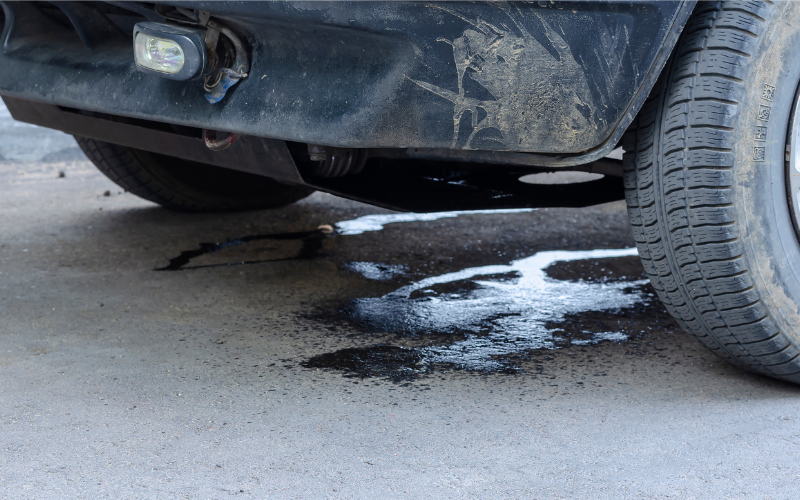
If you’ve spotted a puddle or drip underneath your car, it’s worth finding out where it’s coming from. While some leaks are relatively harmless, others can point to a fault that could affect your vehicle’s safety, reliability, or performance.
Common leaks include engine oil, coolant, brake fluid, transmission fluid, and power steering fluid. Identifying the fluid early and dealing with the cause can often help prevent bigger repair bills further down the line.
Why Is My Car Leaking Fluid?
Few things make drivers worry quite like finding a patch of fluid underneath their car.
Maybe you’ve come out to the driveway in the morning and spotted a small puddle near one of the wheels. Or perhaps you’ve noticed a drip on the garage floor that wasn’t there before.
The good news is that not every fluid leak means something serious has gone wrong. In some cases, it may simply be water draining from the air conditioning system, which is completely normal.
That said, some leaks shouldn’t be ignored.
Modern vehicles rely on several different fluids to keep major systems working properly. They lubricate moving parts, regulate temperature, assist braking, and help the transmission operate smoothly. If one of those fluids starts escaping, it can eventually cause problems elsewhere.
The tricky part is that leaks often develop gradually.
A few drops here and there might not seem like a big deal at first. The car still drives normally, there are no warning lights showing, and everything feels fine. But over time, fluid levels can fall, and what started as a minor issue can become something much more expensive.
Engine Oil Leaks
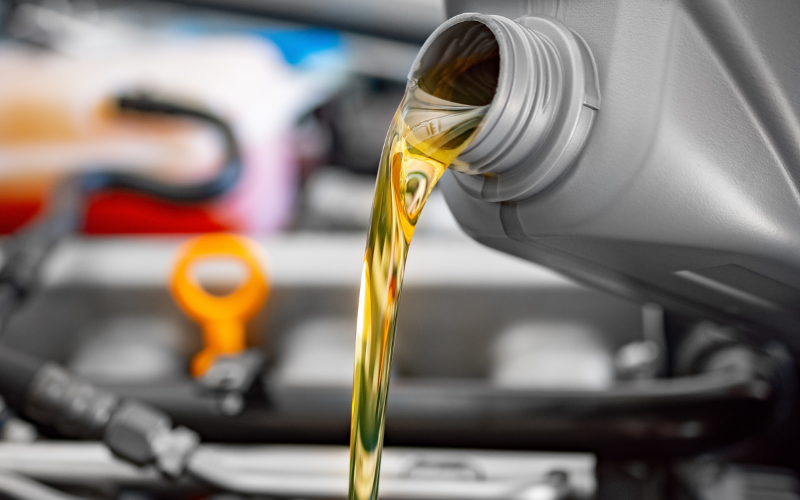
Engine oil leaks are probably the most common type of leak drivers come across.
Oil leaks can develop for all sorts of reasons, including:
- Worn seals or gaskets
- Damaged oil pans
- Loose drain plugs
- General wear as components get older
Sometimes the leak is obvious. Other times it’s so slow that you only notice the occasional spot on the driveway.
The problem is that engine oil is responsible for lubricating and protecting moving parts inside the engine. If levels drop too far, those components can start wearing much faster than they should.
Coolant Leaks
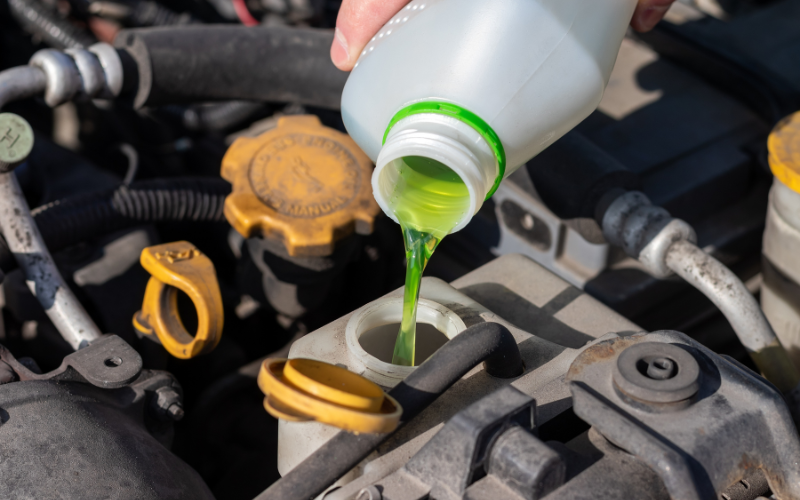
Coolant has a simple but important job. It helps carry heat away from the engine and prevents it from overheating.
Depending on the vehicle, coolant can be green, pink, orange, blue, or even yellow.
Signs of a coolant leak often include:
- A sweet smell around the vehicle
- Fluid underneath the front of the car
- Rising engine temperatures
- A low coolant warning light
A lot of coolant leaks start off slowly.
You might find yourself topping up the coolant every so often without giving it much thought. Then one day the engine temperature starts creeping up while you’re sitting in traffic or driving on a warm day.
If coolant levels become too low, overheating can happen surprisingly quickly, which is why it’s important not to ignore any signs of coolant loss.
Brake Fluid Leaks
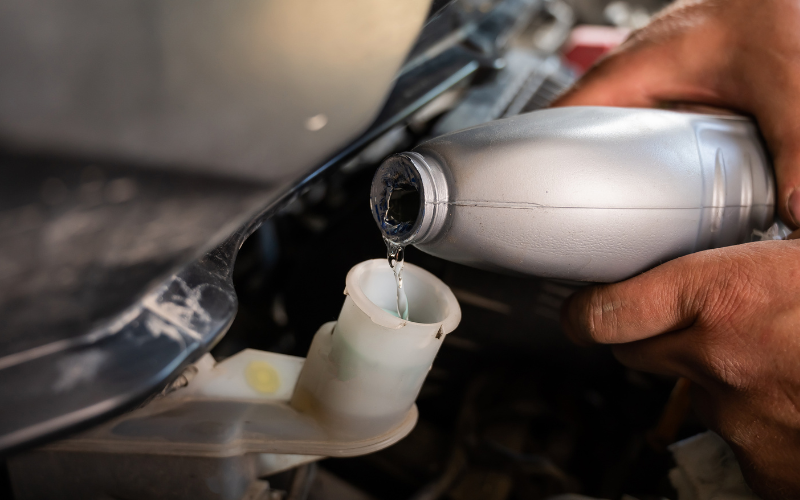
Brake fluid is one of the most important fluids in your vehicle.
Without it, your braking system can’t generate the hydraulic pressure needed to stop the car properly.
Common warning signs of a brake fluid leak include:
- A soft or spongy brake pedal
- Longer stopping distances
- Warning lights on the dashboard
- Fluid appearing near the wheels
Drivers often describe the brake pedal as feeling “different” before they notice anything else.
If that happens, it’s worth taking seriously.
Unlike some other leaks that can be monitored for a short period, brake fluid leaks should be checked as soon as possible because they can directly affect your ability to stop safely.
Transmission Fluid Leaks
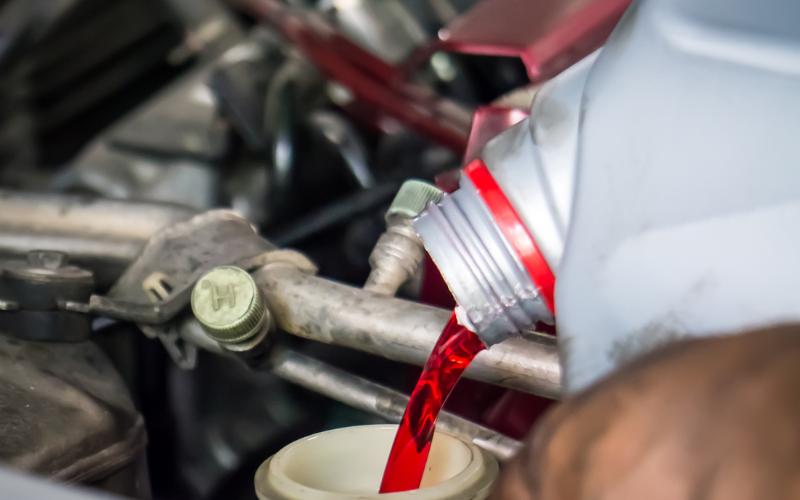
Transmission fluid helps keep the gearbox lubricated, cooled, and operating smoothly.
It’s usually red or reddish-brown in colour, making it easier to identify than some other fluids.
A transmission fluid leak may lead to:
- Difficulty changing gears
- Delayed gear engagement
- Slipping gears
- Jerky gear changes
- Red fluid underneath the vehicle
Gearboxes rely heavily on the correct fluid levels to operate properly.
A small leak may not seem noticeable at first, but as fluid levels continue to drop, gear changes can become less smooth and more serious problems can begin to develop.
Power Steering Fluid Leaks
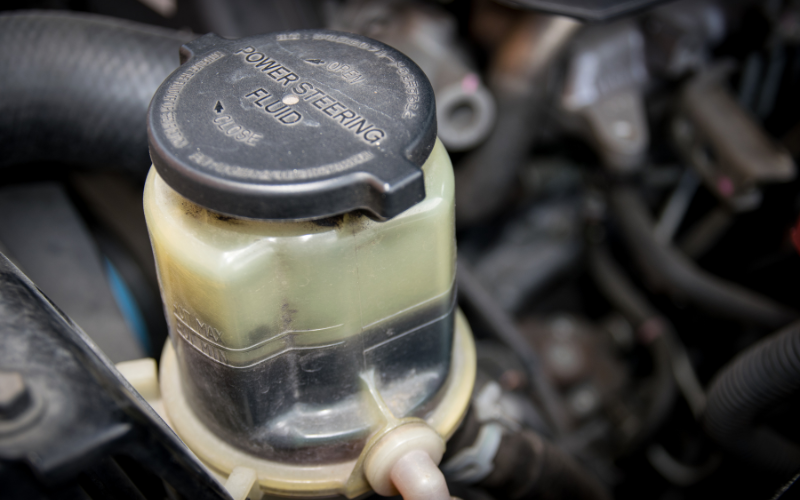
If your vehicle uses hydraulic power steering, fluid plays a major role in making the steering feel light and responsive.
When a leak develops, one of the first things drivers usually notice is that the steering suddenly feels heavier than normal.
You may also notice:
- A whining noise when turning
- Fluid underneath the front of the vehicle
- Steering that feels less smooth than usual
Sometimes the change happens gradually, making it easy to overlook.
Then one day you realise parking feels much harder than it used to.
Windscreen Washer Fluid Leaks
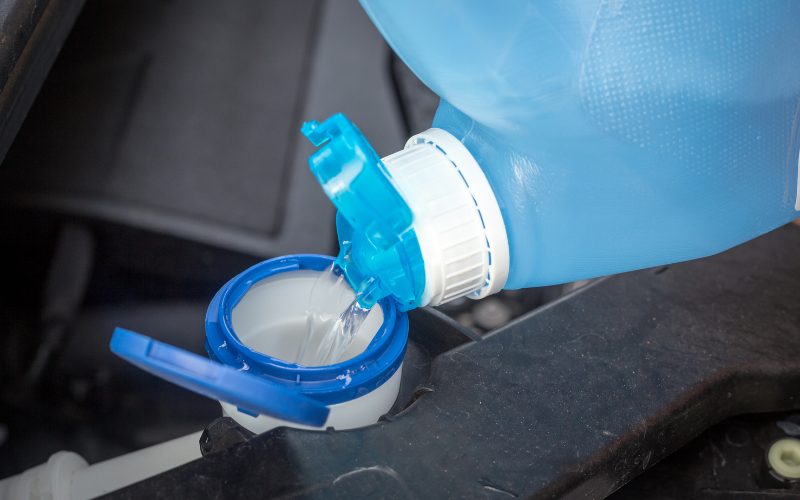
Not every fluid leak is a major concern.
Windscreen washer fluid leaks are usually more of an inconvenience than a serious fault.
The fluid is often blue, green, or pink and is commonly found beneath the front of the vehicle.
You might notice:
- The washer bottle keeps running empty
- The washers stop spraying properly
- Fluid appearing underneath the front bumper
Is It Ever Just Water?
Yes, quite often.
One of the most common causes of a puddle underneath a vehicle is simply condensation from the air conditioning system.
When the air conditioning is running, moisture is removed from the air inside the cabin. That moisture has to go somewhere, so it drains underneath the car as water.
This is completely normal.
Air conditioning condensation is usually:
- Clear
- Odourless
- Found underneath the passenger side of the vehicle
When Should You Get a Fluid Leak Checked?
As a rule of thumb, any leak involving oil, coolant, brake fluid, transmission fluid, or power steering fluid is worth investigating.
Even if the vehicle still seems to be driving perfectly normally, leaks rarely stay the same forever.
Over time they tend to become larger, which can lead to:
- Reduced performance
- Increased wear on components
- More expensive repairs
- Unexpected breakdowns
For Fluid Leak Diagnosis, Contact In Town Automotive
At In Town Automotive, our experienced technicians can quickly identify the source of the leak and advise on the most effective repair. Whether it’s engine oil, coolant, brake fluid, transmission fluid, or another vehicle fluid, we’ll help get to the bottom of the issue.
Get in touch with In Town Automotive today to book an inspection and find out what’s causing that leak before it becomes a bigger problem.


 bookings@intownautomotive.co.uk