
At a Glance
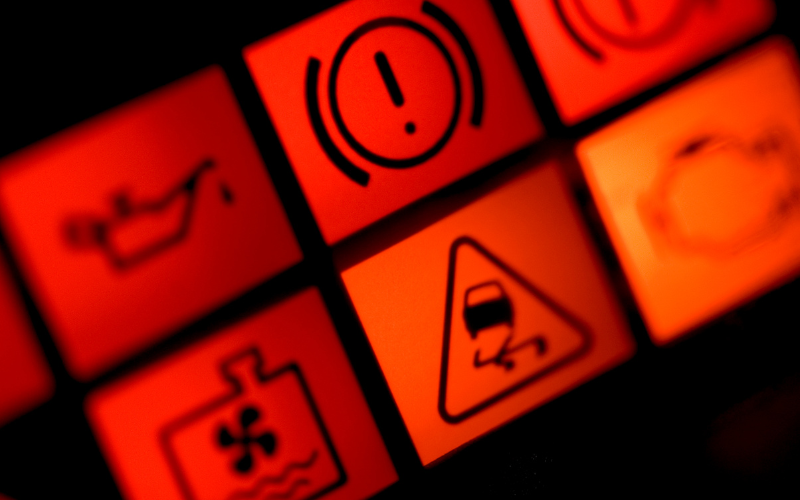
Few things grab your attention while driving quite like a warning light suddenly appearing on the dashboard.
Sometimes it’s nothing too serious. Other times, it’s your car’s way of telling you there’s a problem that needs looking at before it gets worse.
The difficulty is that most warning lights don’t tell you exactly what’s wrong. They simply alert you that something isn’t working as it should. Knowing what the most common warning lights mean can help you decide whether it’s safe to continue your journey or whether it’s time to get the car checked.
Why Do Dashboard Warning Lights Come On?
Behind the scenes, dozens of sensors are constantly monitoring different systems around the vehicle. They’re checking everything from engine performance and battery charging to tyre pressures, braking systems, emissions equipment and more.
If something falls outside its normal operating range, the car will usually let you know by illuminating a warning light on the dashboard.
Most drivers have experienced that moment of panic.
You’re driving along perfectly happily when a light suddenly appears that you’ve never seen before. The car feels fine. There are no strange noises. Nothing seems different.
Yet there it is, staring back at you from the dashboard.
It’s tempting to ignore it and hope it disappears on its own. Sometimes it does. But quite often a warning light is giving you an early heads-up that something needs attention before it turns into a bigger problem.
Check Engine Warning Light
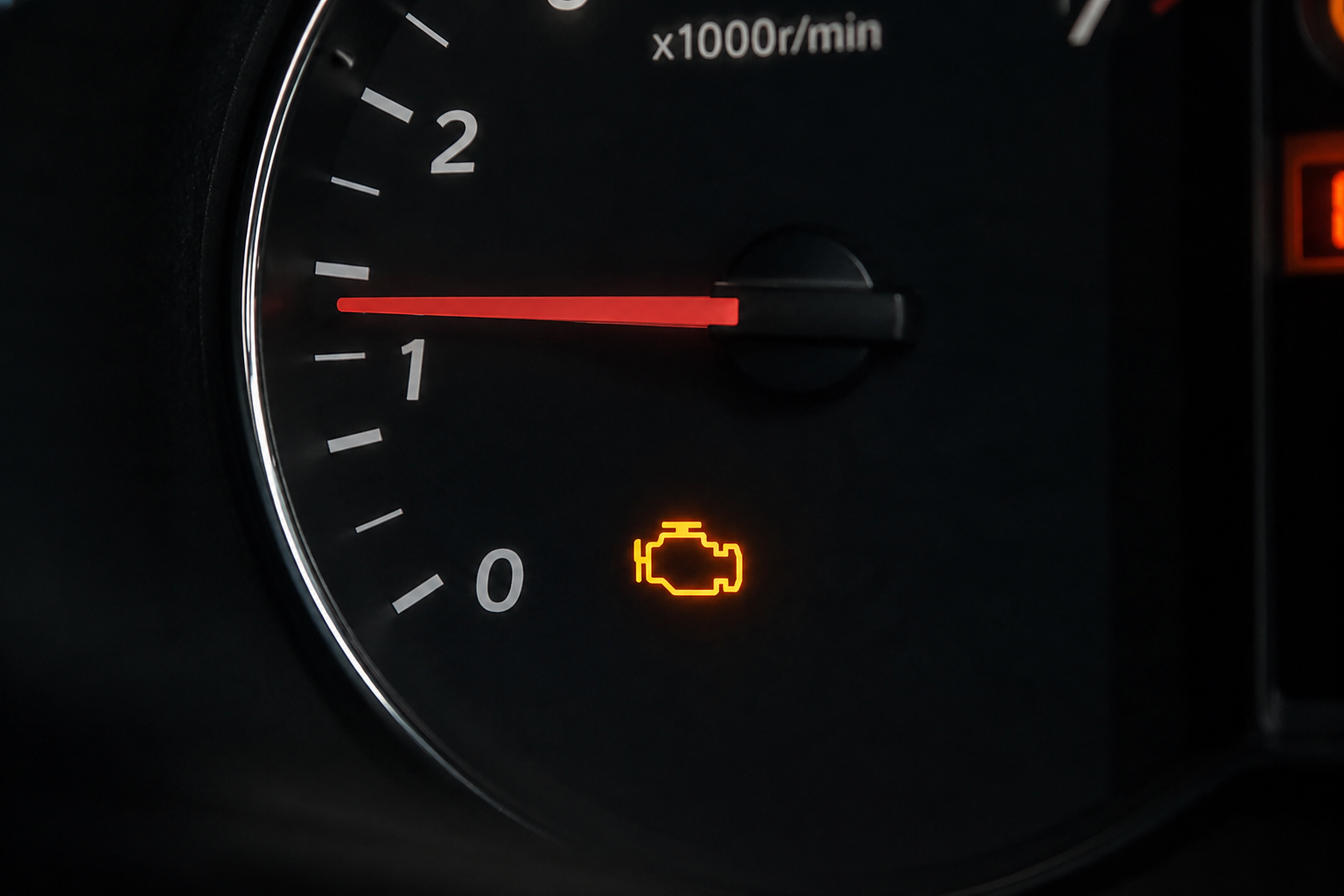
The check engine light is probably the warning light that causes the most confusion.
That’s because it can come on for hundreds of different reasons.
Sometimes the cause is relatively minor. Something as simple as a loose fuel cap can trigger it. Other times, it could point to an issue with the engine, fuel system, ignition system or emissions equipment.
You might notice:
- Reduced performance
- Poor fuel economy
- Hesitation when accelerating
- Rough running
- Or absolutely no symptoms at all
That’s what makes the check engine light so frustrating.
Two vehicles can show exactly the same warning light, yet have completely different faults causing it.
If the light stays on, it’s usually worth having the vehicle scanned with diagnostic equipment to find out what’s actually going on.
Battery Warning Light
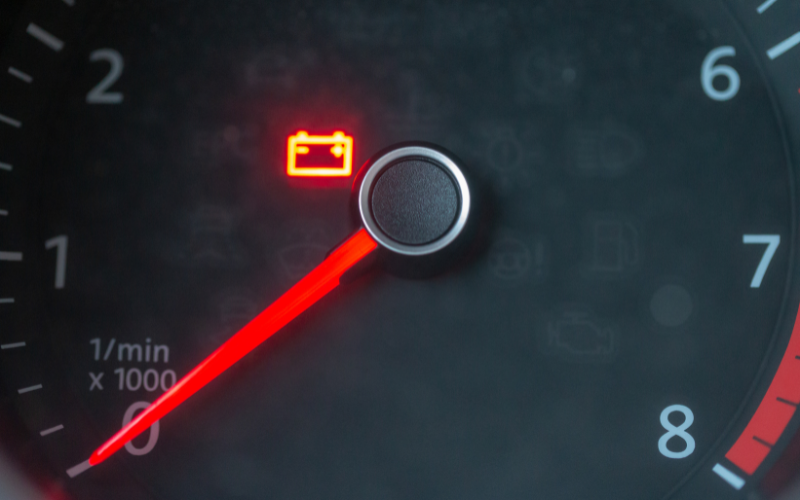
Seeing a battery symbol appear on the dashboard often makes people assume they need a new battery.
In reality, that’s not always the case.
The battery warning light is often linked to the charging system rather than the battery itself.
Possible causes include:
- Alternator faults
- Charging system problems
- Loose battery connections
- A worn drive belt
The car will often continue driving normally at first, which is why many people don’t think much of it.
The problem comes later.
If the battery isn’t being charged properly, it will eventually run out of power. You may start noticing electrical issues, warning messages, dim lights, or eventually a car that simply won’t restart.
Engine Temperature Warning Light
Nobody wants to see the temperature warning light come on.
An overheating engine can quickly go from a small issue to a very expensive one if it’s ignored.
Common causes include:
- Low coolant levels
- Coolant leaks
- Thermostat faults
- Cooling system problems
You may notice the temperature gauge rising first. You might see steam from under the bonnet. Or sometimes the warning light simply appears without much warning at all.
If your vehicle starts overheating, it’s important to stop somewhere safe and allow the engine to cool down.
Trying to push on and finish the journey can sometimes turn a straightforward repair into major engine damage.
Oil Pressure Warning Light
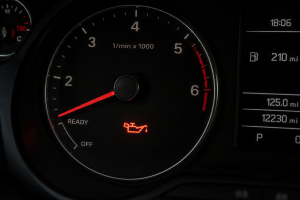
This is one warning light that should never be ignored.
Engine oil is what keeps all the moving parts inside the engine properly lubricated.
Without enough oil pressure, metal components can start rubbing against each other extremely quickly.
Potential causes include:
- Low oil levels
- Oil leaks
- Oil pump faults
- Internal engine problems
The tricky thing is that the engine won’t always make alarming noises straight away.
A vehicle can sometimes seem to be running perfectly normally while damage is already occurring inside the engine.
That’s why it’s always best to get this warning checked as soon as possible.
Brake Warning Light
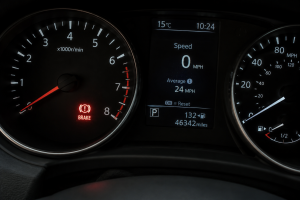
When it comes to safety, the brake warning light is one of the most important lights on the dashboard.
It can be triggered by:
- Low brake fluid
- Worn brake components
- Braking system faults
- The handbrake still being applied
Sometimes the explanation is completely harmless.
Other times, it could indicate a fault that affects the vehicle’s ability to stop safely.
If the light stays on after releasing the handbrake, it’s worth getting it investigated.
Tyre Pressure Warning Light
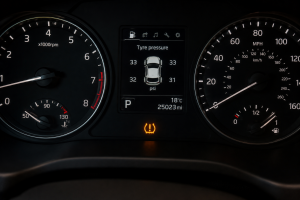
This is a warning light many drivers become familiar with during colder weather.
As temperatures drop, tyre pressures naturally fall, which can often be enough to trigger the warning.
However, it could also indicate:
- A puncture
- A slow air leak
- Tyre damage
- A faulty pressure sensor
A tyre doesn’t have to look obviously flat before the warning light comes on.
Even a relatively small loss of pressure can affect handling, fuel economy and tyre wear over time.
If the warning appears, it’s always worth checking the tyres rather than assuming it’s nothing.
ABS Warning Light
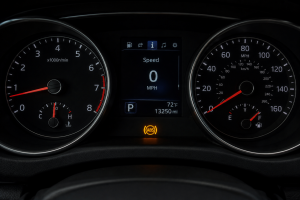
ABS stands for Anti-lock Braking System.
The system helps prevent the wheels from locking during heavy braking, helping you maintain control of the vehicle.
If the ABS warning light appears, your normal brakes will often continue working.
That’s why many drivers don’t notice any difference straight away.
The issue is that the anti-lock braking function may no longer be available if you need it during an emergency stop or on a slippery road surface.
Airbag Warning Light
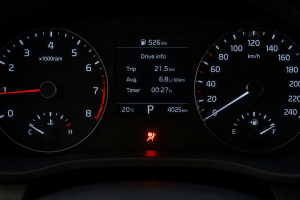
The airbag warning light relates to the vehicle’s safety systems.
This includes:
- Airbags
- Seatbelt pretensioners
- Other restraint system components
The car may drive exactly as it always has.
In fact, many drivers continue using the vehicle without noticing any other symptoms.
The concern is that these systems are there to protect you in the event of an accident.
If a warning light is showing, there’s a possibility part of that protection may not work as intended.
For that reason, it’s always worth getting the fault investigated.
When Should You Be Concerned?
Not every warning light means you need to pull over immediately.
At the same time, warning lights don’t generally appear for no reason.
As a rough guide:
- Red warning lights usually indicate something more serious and should be dealt with as soon as possible.
- Amber warning lights normally mean a fault has been detected and should be checked soon.
- Green and blue lights are generally informational.
If you’re ever unsure, it’s always better to be cautious.
Many drivers ignore a warning light because the vehicle still feels fine. Then weeks later they’re faced with a repair that could potentially have been avoided if the issue had been identified earlier.
For Dashboard Warning Light Diagnostics, Contact In Town Automotive
A warning light doesn’t automatically mean disaster.
Quite often the cause turns out to be something relatively straightforward.
The important thing is finding out what the light is trying to tell you before the problem develops into something bigger.
At In Town Automotive, we use professional diagnostic equipment to identify faults quickly and accurately. Whether it’s a check engine light, battery warning, ABS fault, tyre pressure warning, or another dashboard alert, get in touch today and we’ll help get to the root of the issue and advise on the most appropriate repair.

