

Introduction
If your car jerks when accelerating, you’ll probably notice it pretty quickly. Instead of picking up speed smoothly, the car might hesitate, judder or suddenly lurch forwards when you put your foot down.
It might only happen every now and then, or you could find yourself dealing with it every time you accelerate.
There isn’t one single cause. The problem could be related to how the engine is getting fuel or air, an ignition issue or something involving the clutch or gearbox.
When it happens can give you a few clues too. Does the car jerk when you pull away? Only when you accelerate hard? Or does it seem worse when the engine is cold?
Let’s take a look at some of the common causes.
Why Does My Car Jerk When Accelerating?
For your car to accelerate smoothly, quite a few things need to happen at the right time.
The engine needs the correct amount of fuel and air, while a petrol engine also needs a reliable spark. That power then needs to make its way through the transmission and eventually to the wheels.
If something isn’t quite right along the way, you might feel it as hesitation or jerking when you accelerate.
That doesn’t necessarily tell you what’s wrong, though. A few different problems can produce very similar symptoms.
Worn or Faulty Spark Plugs
If you drive a petrol car, the spark plugs are one possible place to look.
They’re responsible for creating the spark that ignites the fuel and air mixture inside the engine. As they wear, they may not do this as effectively as they once did.
From behind the wheel, you might notice the engine hesitating or juddering when you accelerate. It may also feel rough when idling or be more difficult to start.
Spark plugs naturally wear over time, so if yours are due for replacement, it’s worth having them checked.
Ignition Coil Problems
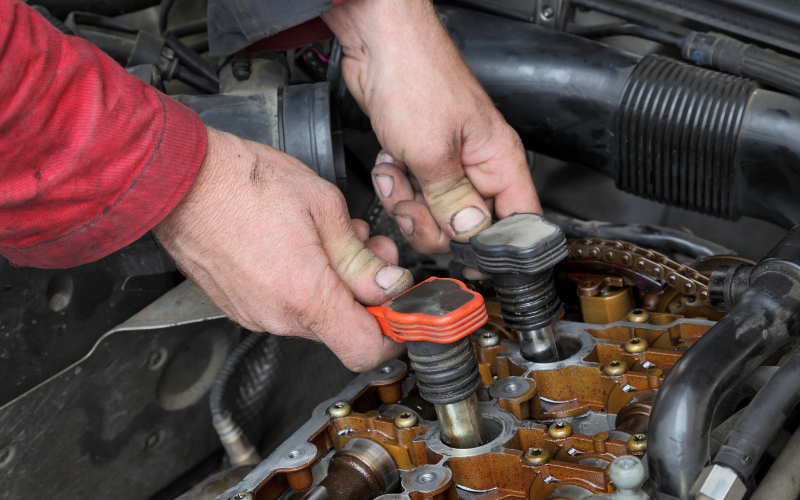
The ignition coils work alongside the spark plugs, and if one starts to fail, the engine may begin to misfire.
You might feel that as a sudden jerk or hesitation when accelerating. The engine may also sound rough, lose some power or bring up a warning light on the dashboard.
The tricky part is that these symptoms can be caused by other problems too.
So, while an ignition coil could be responsible, it’s better to find out what’s actually happening rather than replacing parts based on the symptoms alone.
Fuel Delivery Problems
Your engine needs a steady supply of fuel, and it needs even more when you ask it to accelerate.
If something is getting in the way of that supply, you may notice the problem more when you put your foot down.
There are several parts involved in getting fuel to the engine, including the fuel pump, filter and injectors. A problem with any of these could affect how smoothly the engine runs.
You might also notice poor acceleration, hesitation or the car generally feeling down on power.
Dirty or Faulty Fuel Injectors
Fuel injectors control how fuel is delivered into the engine.
If an injector becomes dirty or develops a fault, the engine may not receive fuel as evenly as it should. That can sometimes result in hesitation or jerking when you accelerate.
You may notice other changes too, such as poorer performance, increased fuel consumption or difficulty starting the car.
That doesn’t automatically mean the injectors are at fault, though. Plenty of engine problems can cause similar symptoms, so it’s worth having the cause properly checked.
Problems With the Air Intake
It’s not just fuel that your engine needs. It also needs the right amount of air.
Something as simple as a dirty air filter can restrict airflow, while faults elsewhere in the intake system can also affect how the engine runs.
The car may feel sluggish, hesitate when you accelerate or simply not respond to the accelerator as smoothly as it normally does.
If you’ve noticed a general drop in performance as well as the jerking, it’s worth mentioning both when you get the car looked at.
Could the Clutch Be Causing the Jerking?
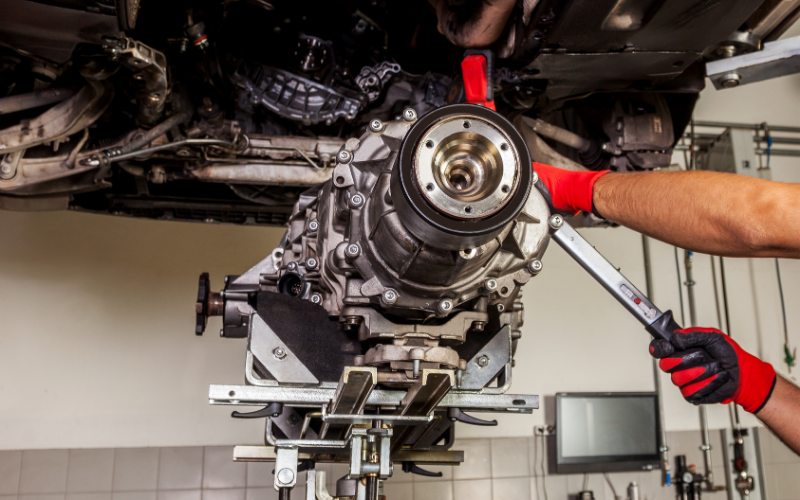
If you drive a manual car, the clutch could also be involved.
You might notice the car juddering as you pull away or when you release the clutch after changing gear. If that’s when the problem happens most often, it’s useful information.
A worn clutch can cause other symptoms as well.
For example, if the clutch starts slipping, you may notice the engine revs climbing without the car picking up speed as quickly as it should.
If changing gear or using the clutch seems to trigger the jerking, it’s worth getting it checked.
Could It Be the Gearbox?
Sometimes what feels like an engine problem can actually be related to the gearbox.
You may notice a jerk as the car changes gear, difficulty selecting a gear smoothly or the problem appearing more often in one particular gear.
This can happen with both manual and automatic cars, although the possible causes aren’t necessarily the same.
If the car has suddenly started changing gear differently to normal, don’t ignore it. Getting it checked sooner can help prevent an existing problem from becoming worse.
Why Does My Car Jerk at Low Speeds?
If the jerking mostly happens at low speeds, pay attention to exactly what you’re doing when it starts.
Does it happen as you pull away? While changing gear? Or when you gently press the accelerator while already moving?
In a manual car, juddering as you pull away could be related to the clutch. If the engine itself seems to hesitate, there are several other possibilities.
You don’t need to work out the cause yourself. Simply knowing when the problem happens can make it easier to investigate.
Why Does My Car Jerk When Accelerating Hard?
You might find the car feels completely normal until you put your foot down.
Accelerating harder asks more from the engine. If there’s a problem with the ignition, fuel supply or airflow, it may therefore become much more noticeable when you try to accelerate quickly.
You may feel a brief hesitation, repeated jerking or a general lack of power.
If it keeps happening, there’s no need to repeatedly accelerate hard to see if you can make it happen again. Make a note of what you were doing at the time and get the car checked.
What if the Engine Warning Light Comes On?
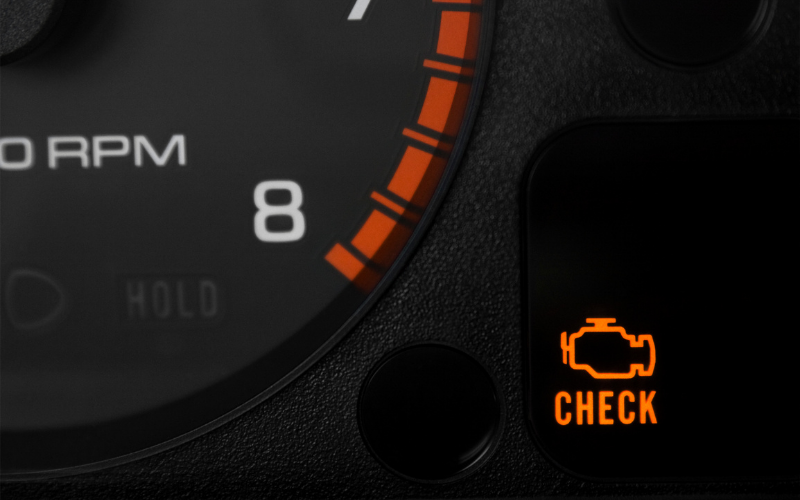
If the car starts jerking and an engine warning light appears at the same time, that’s another sign something needs attention.
The car may have detected a fault affecting how the engine is running. A diagnostic scan can help identify stored fault codes and give a technician somewhere to start looking.
That doesn’t mean the warning light can tell you exactly which part needs replacing. It’s one piece of information that can help track down the actual cause.
If the warning light is flashing, the engine is running very roughly or the car has suddenly lost a lot of power, avoid driving it unnecessarily and have it checked.
Is It Safe to Drive if Your Car Jerks When Accelerating?
It depends on how bad the problem is and what’s causing it.
A slight hesitation every now and then is very different to a car that suddenly loses power or jerks heavily whenever you accelerate.
It’s also worth thinking about where the problem could catch you out. Unpredictable acceleration can be particularly concerning when you’re pulling out of a junction, joining a faster road or overtaking.
If the jerking is getting worse, the car is losing power, the engine is running roughly or warning lights have appeared, it’s best to get it looked at.
When Should You Get It Checked?
If your car jerks when accelerating regularly, don’t wait until it becomes much worse before doing something about it.
You don’t need to know what’s causing it before visiting a garage. But try to remember when it happens.
Is the engine hot or cold? Are you accelerating gently or putting your foot down? Does it happen in a certain gear? Have you noticed any warning lights or unusual noises at the same time?
Those little details can make it much easier to narrow down the problem.
Even if the car seems completely normal the rest of the time, repeated jerking or hesitation is worth getting checked.
Get Your Car Checked at In Town Automotive
A car that jerks when you accelerate can be frustrating, but more importantly, it’s a sign that something may not be working as it should.
At In Town Automotive, we can take a look at your vehicle, find out what’s causing the problem and explain what, if anything, needs attention.
So, if your car jerks when accelerating and the problem keeps coming back, get in touch with the In Town Automotive team and we’ll help you get to the bottom of it.

