

Introduction
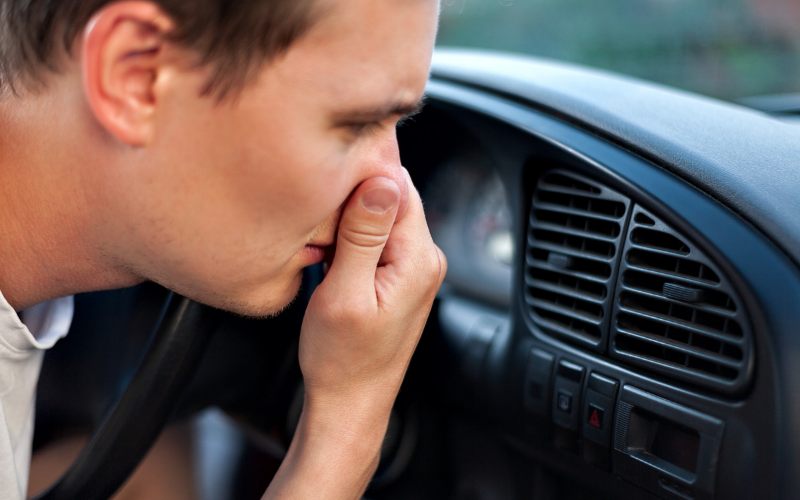
If your car smells like burning, it’s probably going to get your attention pretty quickly. And understandably, you’ll want to know where it’s coming from.
There isn’t one single cause. It could be something as simple as the brakes getting particularly hot, or it could point to an oil leak, clutch problem or electrical fault.
The smell itself can sometimes give you a clue, but when you notice it is just as useful. Does it happen after braking? Does it come through the air vents? Or do you only notice it once you’ve parked up and got out of the car?
Let’s go through some of the most common causes and what you should look out for.
Why Does My Car Smell Like Burning?
Cars get hot. Your engine, exhaust and brakes all reach high temperatures while you’re driving, so there are plenty of places where a burning smell could come from.
What isn’t normal is a new smell that keeps coming back.
You might notice burning oil, rubber or something that smells more like hot plastic. In other cases, you may struggle to describe the smell at all. That’s fine. Where and when it happens can be just as helpful when trying to find the cause.
Burning Oil
If the smell seems to be coming from under the bonnet, engine oil is one possibility.
Oil can leak from different areas around the engine. If it reaches a hot component, it can start to burn off and create quite a noticeable smell.
You might notice it after a drive when you get out of the car. There may also be other signs, such as oil underneath the vehicle, the oil level dropping between checks or a small amount of smoke from under the bonnet.
If you find yourself regularly topping up the oil, don’t just assume your car is using more than usual. It’s worth finding out where that oil is going.
Overheated Brakes
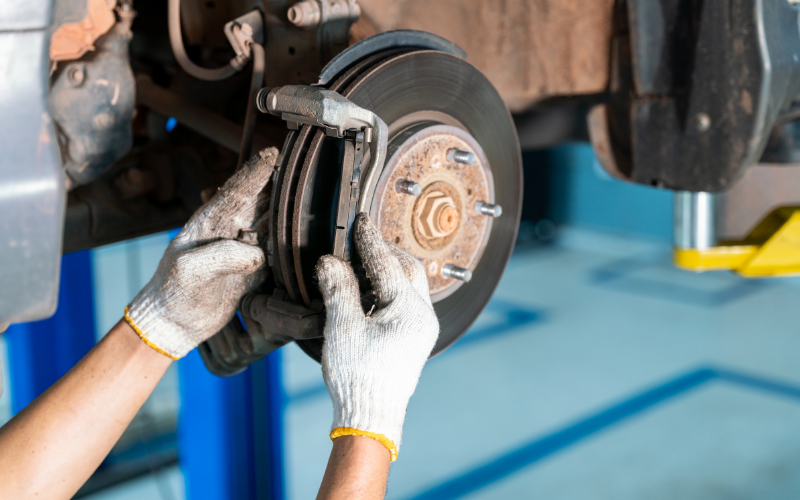
Have you noticed the smell after a lot of braking?
Brakes naturally get hot when they’re being used, particularly after heavy braking or a long downhill stretch. You may occasionally notice a hot smell afterwards.
It becomes more concerning if it happens during normal driving or seems to be coming from one particular wheel.
A brake component that isn’t releasing properly can create more heat than it should. You might also notice the car pulling to one side, a change in how the brakes feel or smoke coming from around the wheel.
If that happens, don’t ignore it. Get the brakes checked.
Burning Rubber
A burning rubber smell might immediately make you think of your tyres, but they aren’t the only possible cause.
There are belts, hoses and other rubber components around the car. If something becomes worn, moves out of position or starts rubbing against another component, it can produce a burning smell.
This can be difficult to work out just from sitting in the driver’s seat, particularly as smells can travel around the vehicle.
If it keeps happening, an inspection is the easiest way to find out what’s actually causing it.
Electrical Problems
Burning plastic or an electrical smell is one you should take seriously.
Modern cars contain plenty of wiring and electrical components. If something overheats or wiring becomes damaged, you may notice a distinctive hot or burning smell.
Sometimes there will be another clue. Something electrical may suddenly stop working, a fuse could blow or a warning light might appear.
If there’s a strong electrical smell, especially if you can see smoke, find somewhere safe to stop and switch the car off rather than carrying on with your journey.
An Overheating Clutch
If you drive a manual car, your clutch could also be responsible.
You may have noticed that distinctive smell before after lots of hill starts or slow manoeuvring. Holding the clutch around its biting point for too long can cause it to get very hot.
That doesn’t automatically mean you need a new clutch.
However, if you’re regularly getting the smell during everyday driving, that’s different. A worn clutch may also start slipping, where the engine revs increase but the car doesn’t pick up speed as you’d expect.
If you’ve noticed both, it’s worth getting the clutch looked at.
A Burning Smell Coming Through the Air Vents
It can be particularly worrying when the smell starts coming into the car through the vents.
The heating or air conditioning isn’t necessarily to blame, though. Your ventilation system draws in outside air, so a smell from around the engine bay can sometimes find its way into the cabin.
On the other hand, the problem could be within the heating and ventilation system itself, such as an electrical component or blower motor.
Try switching the fan off and see whether the smell changes. If it only happens when the heating, fan or air conditioning is running, mention that when you get the car checked.
Can an Overheating Engine Cause a Burning Smell?

Yes, an overheating engine can sometimes be accompanied by unusual smells.
A burning smell on its own doesn’t necessarily mean the engine is overheating, though. Your temperature gauge and dashboard warning lights should give you a better indication that something isn’t right.
You might also see steam coming from under the bonnet.
If the temperature starts climbing unusually high or an overheating warning appears, find somewhere safe to stop and switch the engine off.
Continuing to drive when the engine is overheating can turn one problem into a much more expensive one.
Is It Safe to Drive if Your Car Smells Like Burning?
This really depends on what’s causing it.
If you’ve just driven down a long hill and used the brakes heavily, a temporary hot smell is very different to suddenly smelling burning plastic and seeing smoke.
The important thing is not to assume it’ll be fine simply because the car is still moving normally.
Stop somewhere safe if you notice smoke, an overheating warning, problems with the brakes, electrical issues or a burning smell that’s becoming noticeably stronger.
If there aren’t any other symptoms but the smell keeps coming back, it’s still worth booking the car in to find out why.
When Should You Get a Burning Smell Checked?
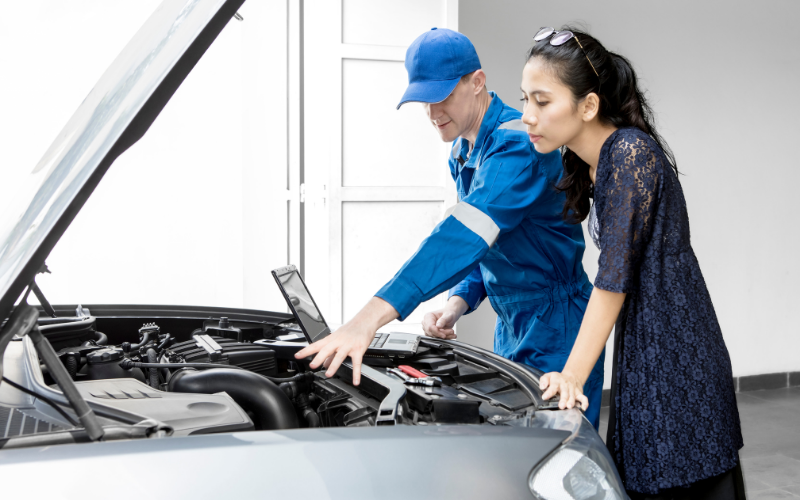
You don’t need to know what’s wrong before taking your car to a garage. But it does help if you can explain exactly what you’ve noticed.
Think about when the smell appears.
Is it after braking? Only once the engine is warm? When you switch the heater on? Does it seem strongest around one wheel, underneath the car or under the bonnet?
Even small details like these can make it easier to narrow down the cause.
If your car smells like burning regularly, or you’ve noticed smoke, warning lights or a change in how the vehicle drives, don’t leave it and hope the smell disappears.
Get Your Car Checked at In Town Automotive
A burning smell doesn’t always mean there’s a serious problem with your car, but it’s not something you want to keep ignoring either.
At In Town Automotive, we can take a look at your vehicle, work out where the smell is coming from and explain what, if anything, needs attention.
So, if your car smells like burning and you can’t work out why, get in touch with the In Town Automotive team and we’ll help you get to the bottom of it.


 bookings@intownautomotive.co.uk