
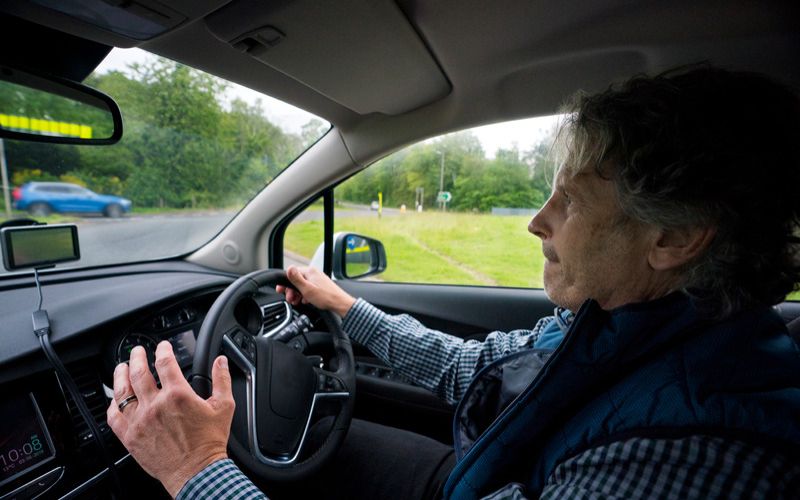
You’re coming up to a roundabout, you brake, and the steering wheel gives a little tug. Nothing dramatic. You hold it straight and forget about it until the next time you slow down, when it does exactly the same thing.
It’s a common problem, and it’s worth taking seriously. If your car pulls to one side when braking, something in the brakes, tyres or suspension usually isn’t doing its job. It might feel minor on a dry road at 30mph. In the wet, or in an emergency stop, it’s a different story.
There are a handful of usual suspects. Here’s what they are, how to spot them, and when you should leave the car where it is and get help.
Why a Car Pulls to One Side When Braking
Think of it as a tug of war. When you brake, both sides of the car should slow down by the same amount. If one side brakes harder, it wins, and the car gets dragged towards it.
Often the brakes are to blame, but not always. Tyres, alignment and worn suspension can all produce the same feeling. So before anything else, ask yourself one thing: does it only pull when I brake, or does it wander when I’m just driving along too? Tell your technician the answer. It saves a lot of guesswork.
The Most Common Causes
A Sticking Brake Caliper
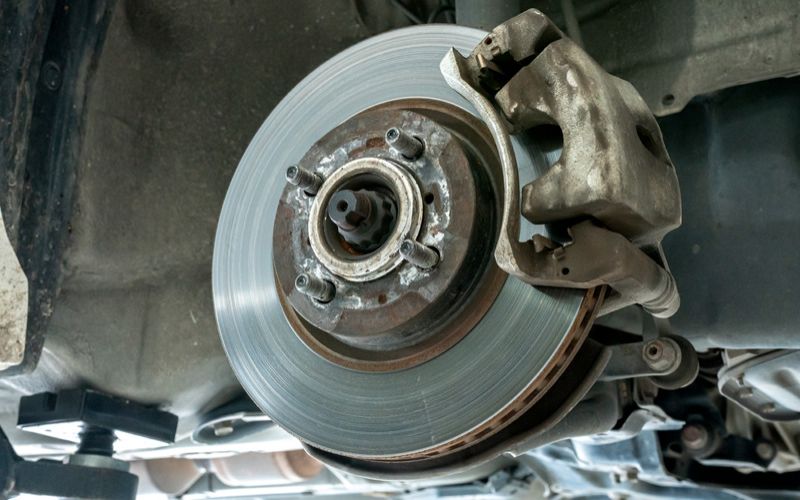
This is one of the more common causes. The caliper is the part that squeezes the pads against the disc, and its moving components need to operate freely. Add a few winters of road salt and they can start to seize. Then the brake on that wheel either won’t grip properly or won’t let go.
Things that point towards a sticking caliper:
- The car pulls when you brake
- There’s a hot, burning smell after a drive
- One wheel is far hotter than the others
- The pads have worn unevenly
- The car feels like it’s dragging, as if the handbrake’s slightly on
A caliper that won’t release properly can generate serious heat and damage the pads and discs. If you see smoke, smell burning or feel a strong pull, stop somewhere safe and call for assistance.
Uneven Pad or Disc Wear
Pads and discs wear out. That’s what they’re for. What shouldn’t happen is one side wearing out much faster than the other, and when it does, there’s usually another fault behind it, such as a seized slider.
Worn pads don’t always cause a pull by themselves. That’s why just slapping new pads on rarely fixes it for good. Grinding, a pedal that pulses under your foot, or brakes that feel weaker than they used to? Book it in.
A Faulty Brake Hose
Brake fluid gets to each wheel through flexible rubber hoses, and these can deteriorate over time. Occasionally the inside breaks down and restricts fluid flowing back properly. This can leave the brake on that wheel partly applied, a bit like a sticking caliper.
The symptoms are similar too: pulling, dragging, a wheel that runs hot. Hoses are part of a safety-critical system, so it’s a job for a qualified technician rather than a weekend fix on the drive.
Tyre Pressures or Tyre Damage
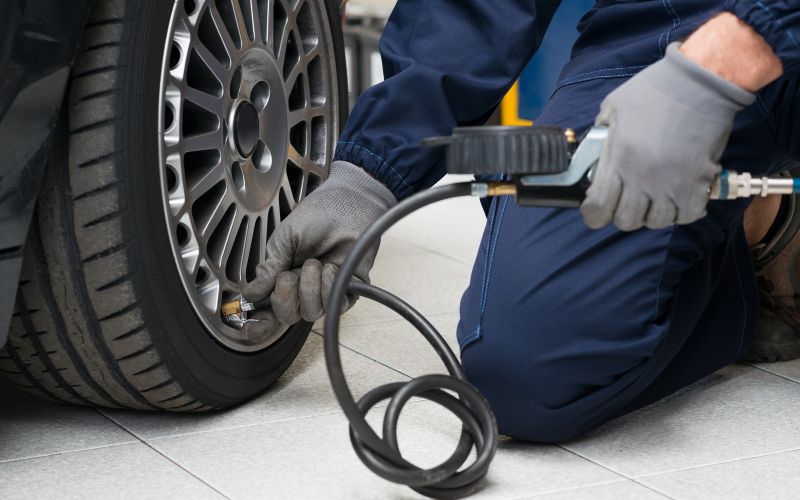
Sometimes the brakes are perfectly fine. If one tyre is noticeably underinflated compared with the tyre on the opposite side, the two won’t grip the road the same way, and you’ll feel it most as you slow down. Uneven wear, hidden damage or mismatched tyres on the same axle can do the same thing.
Checking your tyre pressures is a good place to start. The correct pressures are in your handbook, and often on a sticker inside the driver’s door. If a tyre looks damaged or keeps losing air, don’t keep driving on it. Have it looked at.
Wheel Alignment
Bad alignment usually shows itself whether you’re braking or not. The car drifts on a straight, flat road, the steering wheel sits a little off-centre, and the tyres wear down on one edge.
It can make a braking pull feel worse. But if the car is perfectly happy until you touch the brake pedal, alignment probably isn’t your main problem, so start with the brakes.
Worn Suspension or Steering Parts
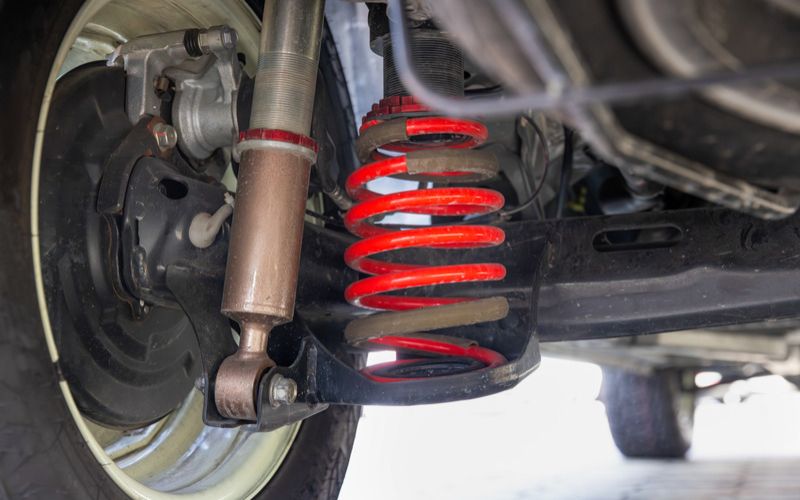
Bushes and ball joints keep each wheel where it’s meant to be. Once they’re worn, braking forces can shove the wheel slightly out of line, and the car goes with it. You might also hear clunks over bumps, notice the steering feels a bit vague, or see patchy wear on the tyres.
What If My Car Pulls Left (or Right)?
A pull to the left can mean the left-hand brakes are gripping harder. That could be because the right side is weak, or because the left side is sticking on. Swap left and right and the same goes for a car that pulls the other way.
Here’s the catch, though. The direction doesn’t tell you which part is faulty, and a tyre or suspension issue could easily give you the same symptom. Getting it checked is better than guessing.
Why Does It Only Happen When I Brake Hard?
Ease to a stop and a small imbalance can go unnoticed. Brake firmly and everything is under far more load, so suddenly it shows. Tired suspension parts also move around more when they’re working hard.
The road itself can fool you as well. Camber, ruts and greasy patches will all nudge a car one way or the other. If it keeps happening on different roads and in different conditions, that’s a strong sign something needs checking. And please don’t go doing hard stops on public roads to test it.
Should I Keep Driving It?
We’d treat any car that pulls to one side when braking as a safety concern. When you need to stop quickly, you need to stop in a straight line.
Some signs mean stop now: a pull that’s sudden or strong, a soft pedal, grinding, smoke or a burning smell. Pull over somewhere safe and arrange recovery. Even a mild pull needs checking promptly, because brake faults can worsen without much warning. Not sure? Ring your garage or breakdown provider and ask before you set off.
How We Diagnose It
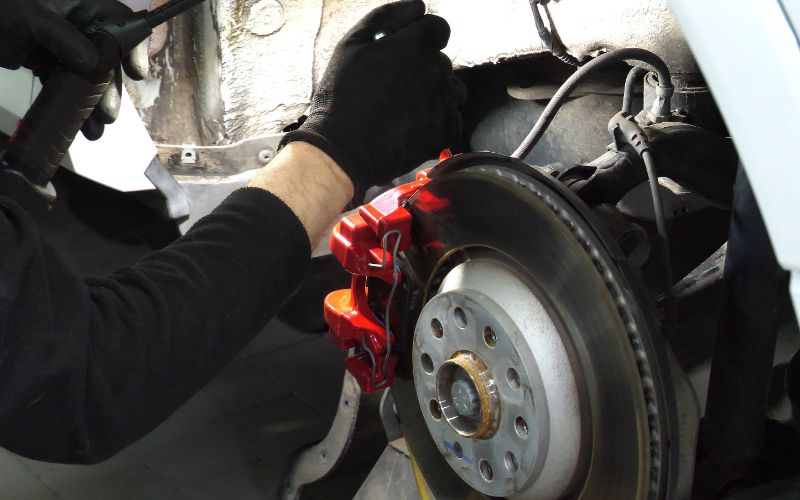
First, we’ll have a chat. Does it pull every time you brake? Only at speed? Does it drift even with your foot off the pedal? Those answers tell us where to start looking.
Then we’ll usually check:
- Pads and discs
- Calipers and sliders
- Brake hoses and the rest of the hydraulic system
- Tyre pressures, condition and wear
- Suspension and steering components
- Alignment, if it seems relevant
Depending on what we find, we may test the braking performance on dedicated equipment too. Our aim is to identify the underlying fault and recommend only the repairs that are necessary.
Preventing Problems in the Future
You can’t see every fault coming. Basic maintenance still helps a great deal, though. Check your tyre pressures every so often, glance at how the tyres are wearing, and make sure the brakes get a proper look at each service.
Also, trust your gut. If the car starts feeling, sounding or braking differently, that’s usually the earliest warning you’ll get. Catching problems early can help prevent further damage and keep your car safe.
When to Book a Brake Check
A car that pulls when you brake should be looked at soon. Make it a priority if you’ve also noticed:
- A pull that’s new or getting worse
- A burning smell, or heat coming from one wheel
- Grinding or scraping as you brake
- A soft or spongy pedal
- Brakes that just don’t feel as strong
- Vibration through the steering wheel
And if the brakes or steering ever feel unsafe, leave the car parked and arrange recovery.
Brake Inspections at In Town Automotive
It might be a sticking caliper. It might be a worn hose, a soft tyre or a tired bit of suspension. Whatever it turns out to be, we’ll work to identify the cause and talk you through it. In Town Automotive carries out brake inspections and repairs at our garages in Northampton and Kettering.
If your car pulls to one side when braking, get in touch with the team and we’ll get you booked in.

