
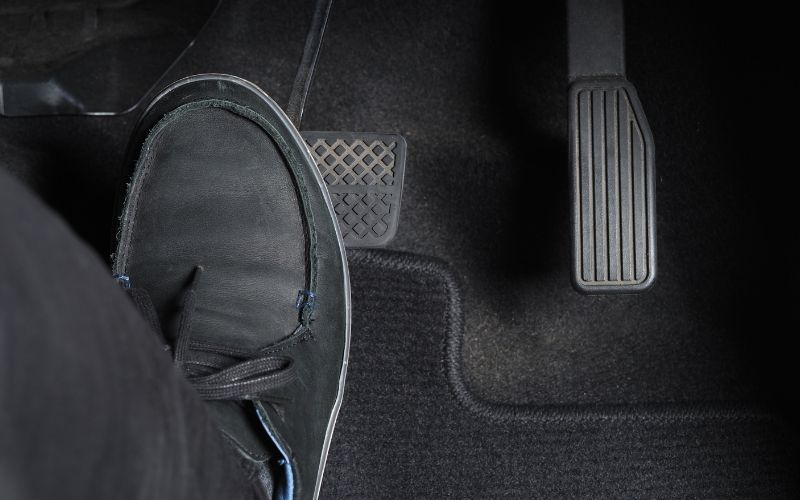
You usually notice a soft or spongy brake pedal straight away. Normally, the pedal feels firm when you press it, but now it sinks further than it should, or it feels a bit squishy under your foot. That’s not a nice thing to feel in the one system you rely on to stop the car.
Several different faults can cause it. Air might have got into the brake lines, or the fluid could be low, old or leaking. A worn hose or a failing master cylinder can do it too. Whatever the cause, you shouldn’t ignore it. Below we cover the usual culprits, what to look out for and what to do next.
What Does a Spongy Brake Pedal Actually Feel Like?
Every car is a little different, but you’ll know how your own brakes normally behave. A healthy pedal feels firm and predictable, and the car slows the way you expect it to.
A spongy pedal feels as if there’s a cushion between your foot and the brakes. The pedal goes further towards the floor before anything happens, and you may find yourself pressing harder than usual just to slow down.
The key question is whether the pedal feels different from normal. Even if the car still seems to stop fine, a change in how the pedal feels is worth taking seriously.
What Causes a Soft or Spongy Brake Pedal?
Your brakes work through a hydraulic system, and a problem almost anywhere in it can change how the pedal feels. These are the most common causes.
1. Air in the Brake Lines
This is one of the most common causes. When you press the pedal, brake fluid carries that pressure to the brakes at each wheel. Brake fluid doesn’t compress easily, but air does. So if there’s air trapped in the lines, some of your effort goes into compressing that air instead of applying the brakes, and the pedal feels springy.
Air usually gets in after brake work that hasn’t been bled properly, or through a leak. Bleeding the system will get the air out, but it’s just as important to find out how it got in, especially if a leak might be to blame.
2. Low Brake Fluid or a Leak
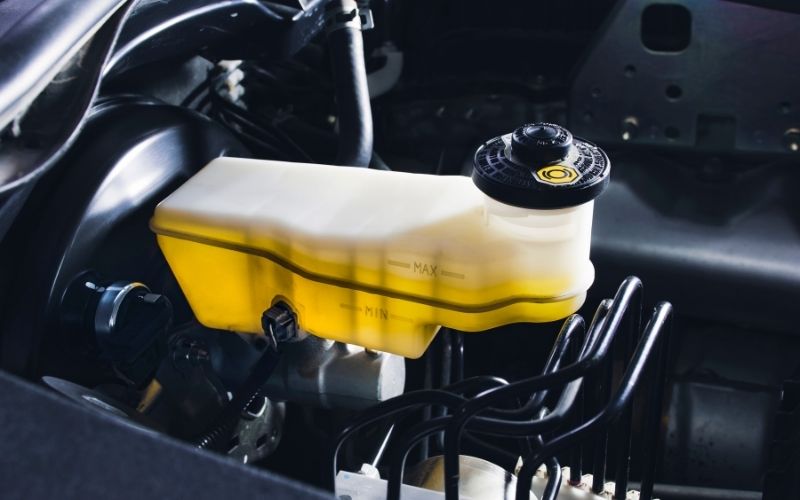
Without enough fluid, the system can’t transfer pressure properly. The level does drop slowly as the pads wear, but a sudden or unexplained drop could indicate a leak in a pipe, a flexible hose, a calliper or another hydraulic part.
You might see fluid under the car, but plenty of leaks don’t leave an obvious puddle. A brake warning light on the dash is another clue. Leaks can get worse quickly and without much warning, so if you think your car is losing brake fluid, stop driving it and have it inspected.
3. Old or Contaminated Brake Fluid
Brake fluid slowly absorbs moisture over time, and that lowers its boiling point. In everyday driving you might not notice, but on a long downhill stretch, or after a lot of heavy braking, the fluid can get hot enough to boil. The vapour that forms behaves just like trapped air and can leave the pedal soft just when you need it most.
Old fluid isn’t behind every spongy pedal, but it’s always worth checking. Your manufacturer sets a replacement interval, so check your service history to see whether a brake fluid change is overdue.
4. A Faulty Master Cylinder
The master cylinder turns the push of your foot into hydraulic pressure. Inside it are seals that can wear out over the years. When they do, pressure can leak past them internally, often without any fluid escaping from the car.
The classic sign is a pedal that slowly sinks towards the floor while you hold steady pressure on it. Other hydraulic faults can feel very similar, though, so a sinking pedal doesn’t automatically mean the master cylinder has failed. It needs checking properly.
5. Worn or Damaged Brake Hoses
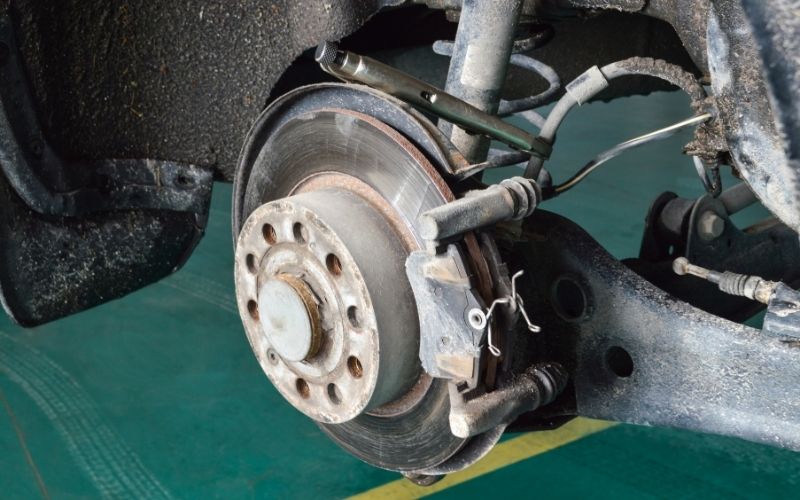
The flexible rubber hoses near each wheel let fluid reach parts that move with the steering and suspension. They’re built to cope with high pressure, but age and damage take their toll. A weakened hose can swell slightly when you brake, which makes the pedal feel soft, and it can eventually start to leak. You can’t spot this from the driver’s seat, which is why the hoses should be checked as part of any brake inspection.
Why Does My Brake Pedal Sink Towards the Floor?
If the pedal feels fine at first but slowly creeps down while your foot stays still, the system probably isn’t holding pressure. That could be the master cylinder or a leak somewhere else.
This is different from the slight dip you might feel when you start the engine on a car with brake assistance. That dip is normal. A pedal that keeps sinking or gets close to the floor isn’t. Don’t just press harder or pump the pedal and carry on with your journey. Have the car checked before you drive it again.
My Brakes Feel Spongy After Being Replaced. Why?
If the pedal changed straight after brake work, contact the garage that did the job first. Some repairs mean opening up the hydraulic system, and any air that gets in has to be bled out afterwards. If some is left behind, the pedal will feel soft.
That said, not every brake job involves the hydraulics, and a spongy pedal after a repair doesn’t automatically mean someone did a poor bleed. There could be a separate fault. Either way, your brakes should feel normal after any work, and if they don’t, get the car looked at before you use it.
Can Worn Brake Pads Cause a Spongy Pedal?
Not usually. As the pads wear, the calliper pistons move further out to make up for it, and that slowly lowers the fluid level in the reservoir. A noticeably spongy brake pedal is much more likely to indicate a hydraulic issue, such as trapped air or brake fluid loss.
Worn pads still matter, though. If the car is taking longer to stop, the brakes are making odd noises or something just doesn’t feel right, the pads and discs should be checked as well. The AA has a useful guide on how to tell if your brake pads or discs need replacing. If you’re due a check, take a look at our brake inspections and repairs.
Is It Safe to Drive With a Spongy Brake Pedal?
No. If your car suddenly has a soft or spongy brake pedal, don’t keep driving until you know why. The brakes may still seem to work, but there’s no guarantee they’ll respond properly in an emergency, and some hydraulic faults can get worse with no warning at all.
It’s even more urgent if the pedal is getting close to the floor, the car is taking longer to stop or you think there’s a fluid leak. If it happens while you’re driving, slow down gently, avoid sudden manoeuvres and pull over somewhere safe as soon as you can. Then call for breakdown recovery rather than trying to drive to a garage.
How Is a Spongy Brake Pedal Diagnosed?
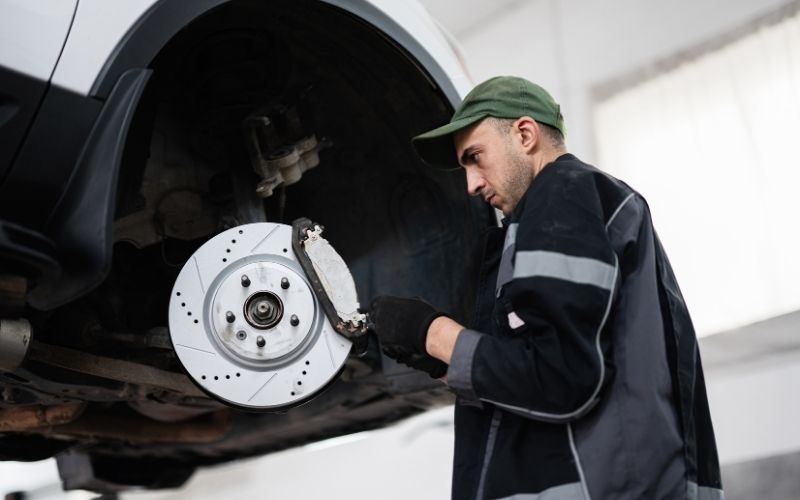
A technician will start by looking over the whole braking system for leaks, damage or anything obviously wrong. That includes the fluid reservoir, pipes, hoses, callipers and other hydraulic parts. If the pedal sinks under steady pressure, they’ll look closely at the master cylinder too.
From there, further tests can confirm whether the problem is trapped air, a pressure loss or something else. Some cars need a specific bleeding procedure, especially where the ABS unit is involved. The aim is to find the real cause, not just top up the fluid or swap parts and hope for the best.
Can You Prevent a Spongy Brake Pedal?
Not every brake fault can be prevented, but regular maintenance helps a lot. Change the brake fluid when the manufacturer recommends it, and have the system checked for wear, damage and leaks as part of regular servicing.
Beyond that, pay attention to how your brakes feel day to day. If the pedal starts going further than it used to, or feels less firm, get it checked sooner rather than later. The same goes for any change in feel after a brake repair.
When Should You Get Your Brakes Checked?
As soon as you notice a soft or spongy brake pedal, ideally before you drive the car again. Take it especially seriously if the pedal sinks, the brakes feel less responsive or a dashboard warning light comes on.
It helps to note a few details for the technician. Did it come on suddenly or gradually? Did it start after recent brake work? Does it happen all the time or only now and then? Even an occasional problem needs looking at, because your brakes have to work properly every single time.
Get Your Brakes Checked at In Town Automotive
A soft or spongy brake pedal could be anything from air in the lines to a leak or a worn hydraulic part. Whatever is behind it, it’s important to find out before it affects how well your car stops.
Our experienced technicians at In Town Automotive can inspect your braking system, find the fault and explain clearly what needs doing. If your brake pedal doesn’t feel right, get in touch with the In Town Automotive team to book an inspection. If you think your brakes may be unsafe, please arrange recovery rather than driving the car to us.

