

Introduction
The signs of a failing alternator aren’t always obvious, especially when your car seems to be running normally. In fact, your alternator probably isn’t something you think about very often. Most of the time, there’s no reason to.
However, it plays an important role in keeping your car’s electrical systems working properly, and when something goes wrong with it, you’ll usually start noticing a few changes.
You might find your headlights aren’t as bright as they used to be, your battery keeps going flat or your car has suddenly become more difficult to start.
The problem is that these aren’t always obvious signs of a failing alternator. A faulty battery or another electrical issue can cause very similar symptoms.
In this guide, we’ll look at some of the common warning signs, what could be causing them and when you should get your car checked.
What Does a Car Alternator Do?
Before getting into the warning signs, it’s worth understanding what your alternator actually does.
When your engine is running, the alternator generates electricity to power various parts of the car. It also recharges the battery, replacing the power used when you start the engine.
Think about everything electrical you use during a normal journey. Your headlights, windscreen wipers, heating fan and radio all need power, along with plenty of other components.
That’s where the alternator comes in.
If it stops charging properly, the battery may have to supply that electricity instead. And because it isn’t being recharged as it should be, it will eventually run out of power.
This is why an alternator problem can sometimes look like a battery problem.
7 Signs of a Failing Alternator
There isn’t one particular warning sign that confirms your alternator is faulty.
Some drivers notice changes to their headlights, while others find themselves dealing with a battery that keeps going flat.
Here are seven signs of a failing alternator that are worth paying attention to.
1. Dimming or Flickering Headlights
Have you noticed your headlights aren’t quite as bright as they used to be?
You might find they occasionally flicker or change brightness while you’re driving, particularly when you’ve got several electrical features switched on.
This can happen when the alternator isn’t supplying electricity consistently.
Of course, it doesn’t automatically mean your alternator is failing. Headlight bulbs, wiring and battery problems can also cause similar issues.
However, if you’ve noticed your headlights behaving differently alongside other electrical problems, it’s worth finding out what’s going on.
2. Battery Warning Light on the Dashboard
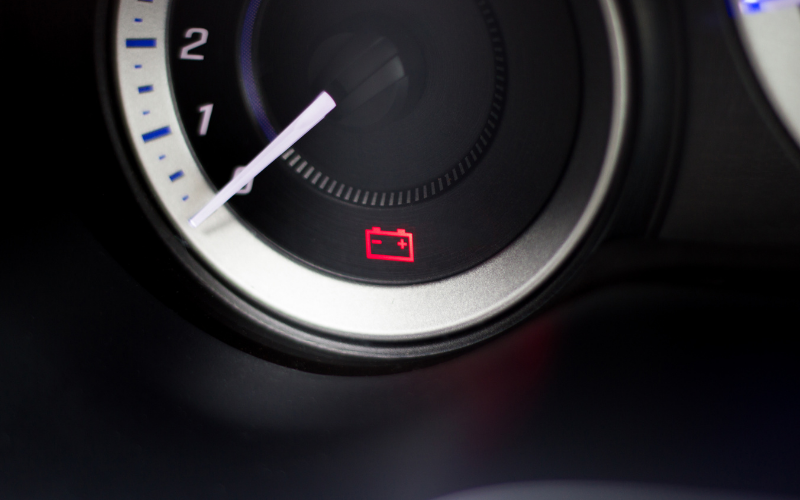
If the red battery symbol appears on your dashboard, you might immediately assume there’s something wrong with the battery.
But that’s not always the case.
The warning light can also indicate a problem with the charging system, which includes the alternator.
You may notice it staying illuminated after starting the engine or suddenly appearing while you’re driving.
If this happens, don’t just assume you can deal with it later.
If the alternator has stopped charging, your car could be relying on whatever power is left in the battery. Once that’s used up, the vehicle may stop running.
We’ve covered what different dashboard symbols mean in our guide to dashboard warning lights.
3. Difficulty Starting Your Car
There’s nothing more frustrating than getting into your car, turning the key and finding it won’t start.
Naturally, your first thought might be that the battery has gone flat.
And sometimes, that’s exactly what’s happened.
However, it’s also worth considering why the battery has lost its charge.
If the alternator hasn’t been charging it properly while you’ve been driving, there might not be enough power left to start the engine.
You may notice the engine turning over more slowly than usual, or it might eventually stop starting altogether.
This is particularly worth investigating if you’ve recently replaced the battery but are already experiencing the same problem again.
4. Electrical Components Not Working Properly
Your headlights aren’t the only things that can be affected by alternator problems.
Modern cars rely on electricity for all sorts of features, from electric windows and infotainment screens to heating fans and other systems.
If the alternator isn’t doing its job properly, you might notice some of these features behaving differently.
For example, your electric windows may move more slowly than normal, or the radio might unexpectedly switch off.
You may also find the problems become more noticeable when several electrical features are being used at once.
That doesn’t necessarily mean the alternator is responsible, though.
There are plenty of other electrical faults that can cause similar problems, which we’ve covered in our guide on common car electrical issues.
5. Unusual Whining or Grinding Noises
Not all signs of a failing alternator involve electrical problems.
Sometimes, you might notice a strange noise coming from under the bonnet.
Alternators contain moving parts, including bearings that can wear over time. When these begin to deteriorate, they can sometimes produce a whining or grinding sound.
You may find the noise becomes louder when you accelerate or changes as the engine speed increases.
The tricky part is that several other components around the engine can make similar noises.
So, while the alternator could be responsible, it’s difficult to know for certain just by listening to it.
If the noise keeps happening, particularly alongside electrical problems, it’s worth getting the car looked at.
6. A Burning Smell From Under the Bonnet
A burning smell coming from your car is never particularly reassuring, especially when you can’t work out where it’s coming from.
If the alternator overheats or there’s a problem with its electrical connections or auxiliary belt, you may notice a smell resembling burning rubber or hot electrical components.
Sometimes, you might only notice it after driving for a while, once everything under the bonnet has warmed up.
However, the alternator isn’t the only possible cause.
Oil leaks, overheating brakes and other electrical faults can all produce similar smells.
If you want to know more about what could be responsible, we’ve covered the different possibilities in our guide to why your car smells like burning.
If the smell is particularly strong or you notice smoke, find somewhere safe to stop, switch the engine off and arrange assistance rather than continuing to drive.
7. Your Car Battery Keeps Going Flat
Having to jump-start your car once is frustrating enough. Having to do it repeatedly is usually a sign that something needs attention.
One possibility is that the alternator isn’t recharging the battery properly.
You might manage to get the car started using jump leads or a battery charger, only to find yourself dealing with exactly the same problem a few days later.
It’s easy to assume the battery needs replacing, but that isn’t always the case.
Even a relatively new battery can run flat if the charging system isn’t working as it should.
Other problems, such as an electrical drain while the car is parked, can also cause the battery to lose charge.
Rather than repeatedly charging or replacing the battery, it’s worth finding out why it keeps happening.
What Causes an Alternator to Fail?
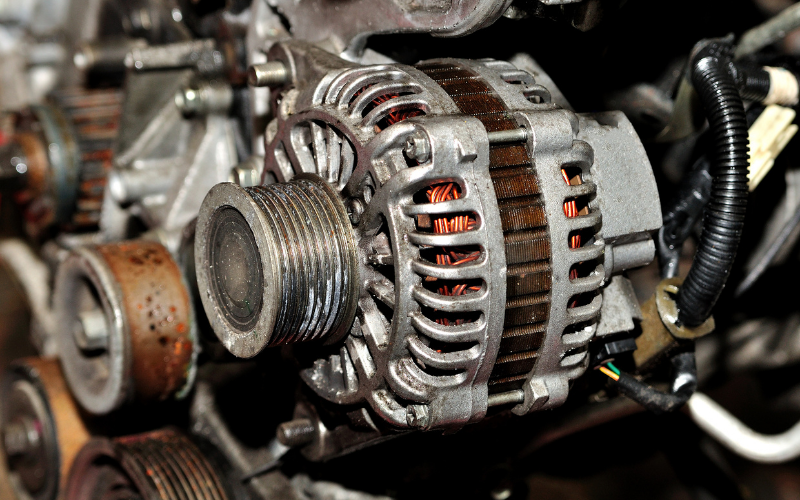
Like most parts of a car, alternators don’t last forever.
They work whenever the engine is running, so it’s only natural that certain components can begin to wear over time.
The bearings inside the alternator may deteriorate, while parts such as the voltage regulator or brushes can also develop faults.
Sometimes, though, the problem isn’t actually inside the alternator itself.
A damaged auxiliary belt, loose connection or corroded wiring can all affect how well the charging system works.
That’s why a charging problem doesn’t automatically mean you need a completely new alternator.
An inspection can help establish whether the alternator has failed or if something else is stopping it from working properly.
Is It the Alternator or the Battery?
This is where things can get a little confusing.
A faulty battery and a failing alternator can cause many of the same problems. Both can leave you with a car that struggles to start, electrical features that don’t work properly or warning lights on the dashboard.
So, how do you know which one is responsible?
If your battery is worn out, you may notice problems when starting the engine, particularly after the car has been parked overnight.
An alternator problem, on the other hand, may become more noticeable while driving because the charging system isn’t supplying electricity as it should.
However, that isn’t a guaranteed way to tell them apart.
A weak battery can affect several electrical systems, and a faulty alternator can eventually leave the battery completely flat.
The easiest way to find out is to have both tested rather than guessing which component needs replacing.
Can You Drive With a Failing Alternator?
Your car might continue running for a short time if the alternator stops charging, but that doesn’t mean it’s a good idea to carry on driving.
Without the alternator providing enough electricity, the car may begin relying on whatever charge is left in the battery.
As that charge runs down, electrical systems can start behaving differently. Eventually, the engine may stop running altogether.
The difficult part is that there’s no reliable way to know how long the battery will last.
It depends on how much charge is left, the condition of the battery and how much electricity the car is using.
If your battery warning light comes on while you’re driving, find somewhere safe to stop and arrange assistance rather than trying to complete your journey.
For more information on what to do if your vehicle breaks down, you can visit the AA’s breakdown advice.
Can a Faulty Alternator Damage Your Battery?
Yes, and it’s another reason why alternator problems shouldn’t be left unresolved.
If the alternator isn’t charging properly, the battery may repeatedly lose its charge.
Over time, regularly running a conventional car battery flat can shorten its lifespan, meaning you could eventually need a replacement battery as well.
Some charging faults can also cause the battery to receive too much voltage, potentially damaging the battery and other electrical components.
So, if your battery keeps going flat, replacing it without checking the charging system might not solve the problem.
You could end up fitting a new battery only to find yourself dealing with exactly the same issue again.
How Is a Faulty Alternator Diagnosed?
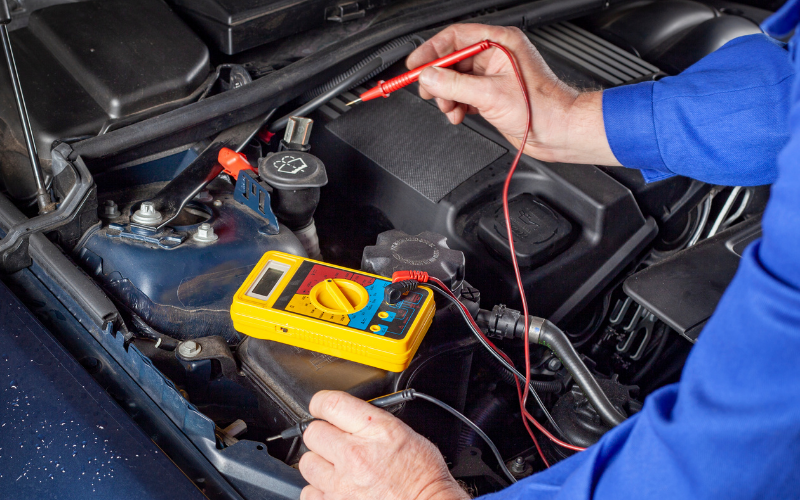
If you’ve noticed several signs of a failing alternator, the next step is to find out what’s causing them.
A garage can carry out diagnostic checks on the battery and charging system to see whether the alternator is supplying electricity correctly.
The technician may also inspect the auxiliary belt, wiring and electrical connections for signs of wear or damage.
Depending on the vehicle and the symptoms, further checks might be needed.
Some modern cars can also store fault codes relating to electrical or charging problems, which can help narrow down the cause.
However, a fault code doesn’t always tell you exactly which component needs replacing.
It’s important to work out what’s actually wrong before carrying out repairs.
Can You Prevent Alternator Problems?
Unfortunately, there’s no guaranteed way to stop an alternator from eventually failing.
Some components simply wear out through regular use.
However, keeping up with your vehicle’s maintenance can help identify certain problems before they become more serious.
For example, a worn auxiliary belt or damaged electrical connection may be spotted during an inspection.
It’s also worth paying attention to anything unusual.
If your headlights have started flickering, you’ve noticed a strange noise under the bonnet or the battery keeps going flat, don’t assume it’ll sort itself out.
Getting these problems checked early could save you from an unexpected breakdown later.
When Should You Get Your Alternator Checked?
You don’t need to wait until your car refuses to start before having a possible alternator problem investigated.
If you’ve noticed one or more of the signs of a failing alternator mentioned in this guide, particularly if they keep happening, it’s worth booking an inspection.
Try to remember exactly what you’ve noticed.
Are the headlights flickering? Has the battery warning light appeared? Does the car struggle to start after being parked overnight? Have you heard any unusual noises?
These details can help a technician narrow down the possible causes.
And if your vehicle is losing electrical power or displaying a charging warning while driving, it’s best not to continue using it unnecessarily.
Get Your Alternator Checked at In Town Automotive
The signs of a failing alternator can be easy to mistake for a battery problem, particularly when your car is struggling to start or repeatedly losing charge.
However, finding out what’s actually causing the problem is important before replacing any parts.
At In Town Automotive, our experienced technicians can inspect your vehicle’s battery and charging system, identify any faults and explain what needs attention.
If you’ve noticed any of these warning signs or are having ongoing electrical problems, get in touch with the In Town Automotive team to arrange an inspection.

